Anthony Pierre
  • Home
  • About
  • Skills
  • Experiences
  • Education
  • More
    Projects Publications Featured Posts Recent Posts Accomplishments
  • Posts
  • Hospitality
  • Posts
Hero Image
Self-Healing Homelab MCP with AWS Route 53, CloudWatch and Lambda

There is a particular kind of frustration that comes from a tool dropping mid-session with no warning. My MCP server — the bridge between Claude and my homelab infrastructure — had developed a habit of going quiet at exactly the wrong moment. The fix I built turned out to be a solid piece of AWS architecture. The plot twist was that the problem itself was something else entirely. The Problem My MCP server runs on CT104 (ai-lab) inside a Proxmox LXC container on my home network, exposed via a Cloudflare tunnel. Claude connects to it over SSE (Server-Sent Events), which keeps a long-lived HTTP connection open so tool results can stream back in real time. When that connection dropped, the session was dead — no tools, no homelab access, nothing. The only recovery was a manual SSH in to restart the process.

Monday, 25 May 2026 Read
Hero Image
Building a Self-Hosted Voice-to-Text Pipeline with Whisper and AWS Bedrock

There is a small but persistent friction point in my workflow: I think faster than I type. When I am working through a problem or drafting something, the gap between thought and text slows everything down. I wanted to be able to speak, get clean written text back, and carry on without sending audio to a third-party API or paying per minute. This is how I built it. The Stack faster-whisper - a CTranslate2-based reimplementation of OpenAI’s Whisper. No PyTorch dependency, significantly smaller image footprint (~500MB vs ~2GB), and genuinely faster on CPU. FastAPI - the backend, handling audio uploads and browser recording. AWS Bedrock Nova Micro - an optional cleanup pass that fixes punctuation, capitalisation, and removes filler words from the raw transcript. Docker on Proxmox LXC - containerised on my existing Docker host alongside Pierre and Sablier. Cloudflare tunnel - HTTPS without a reverse proxy, accessible from desktop and mobile. Why Not the OpenAI Whisper API? The hosted API is fine for occasional use but charges per minute of audio. More importantly, audio stays local with a self-hosted solution. Everything runs on my own infrastructure - the only external call is the optional Bedrock cleanup step, which sends only the raw text transcript, not the audio itself.

Sunday, 26 April 2026 Read
Hero Image
How GitHub Became the Backbone of My Infrastructure

I started this week thinking of GitHub as a place to store code. I ended it realising it is infrastructure. Over 48 hours of building a self-hosted scraping engine, deploying a portfolio site to AWS, and recovering from a broken WireGuard tunnel, GitHub quietly became the thread that held everything together. Here is what I did not expect. Emergency Deployment My VPS went offline mid-project. No warning, no graceful shutdown, just gone. At that point, my portfolio site at anthonyapierre.com was running as a Hugo container on that same server.

Friday, 3 April 2026 Read
Hero Image
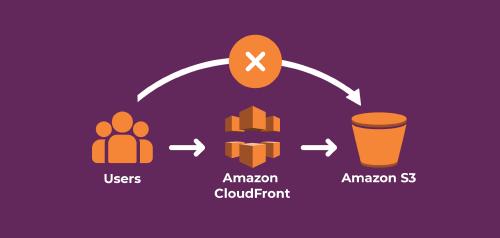
From Cloudflare Pages to AWS: Hosting My Portfolio on S3 + CloudFront

How I migrated my Hugo portfolio site from Cloudflare Pages to a production-grade AWS architecture using S3, CloudFront, ACM, IAM, and GitHub Actions — and what I learned along the way.

Wednesday, 1 April 2026 Read
Hero Image
When My VPS Went Down: Migrating to Cloudflare Workers in a Panic

I’ll be honest, I didn’t plan to migrate my site to Cloudflare Workers today. My hand was forced. I woke up to alerts telling me my VPS was down. My portfolio site, anthonyapierre.com, was completely unreachable. I’d been meaning to set up a proper failover for a while, but like most things that live on the “I’ll sort that eventually” list, it hadn’t happened yet. This is the story of how, on the very first day my site went fully live, an unexpected outage turned into something genuinely useful.

Monday, 30 March 2026 Read
Hero Image
Rebuilding the OSINT Lab: FastAPI, WebSockets, and 11 Tools Confirmed

When I first built the OSINT lab, the goal was simple: a dedicated, network-isolated environment for open source intelligence work running inside a Proxmox LXC container. Maltego and SpiderFoot were up and running, the container was air-gapped from the rest of the homelab, and it did the job. The problem was the dashboard. The original implementation used Node.js with Server-Sent Events to stream tool output to the browser, and it was fragile. SSE connections would drop unpredictably, tool output would get cut off mid-run, and the whole thing had a tendency to fall over under any kind of sustained load. It worked just well enough to be annoying rather than broken enough to force a fix — until I decided to fix it properly.

Saturday, 28 March 2026 Read
Hero Image
Building the HomelabDashboard Android App from Scratch

There is a certain point in homelab development where browser bookmarks and SSH sessions stop being a sensible way to manage things. When you are running 25+ LXC containers across a Proxmox host, a Romanian VPS, and a Docker stack, you want a single place to see everything — and you want it in your pocket. That is where HomelabDashboard came from. Not a third-party monitoring tool, not a pre-built solution — a native Android app built from scratch in Kotlin with Jetpack Compose, connected to a real Flask API running on my own infrastructure.

Tuesday, 24 March 2026 Read
Hero Image
Running an AI Monitoring Agent on AWS Bedrock for £0.02 a Month

When I started building an AI monitoring agent for the homelab, the obvious concern was cost. AWS Bedrock is powerful, but running AI analysis on a continuous basis against 25+ containers sounded like a recipe for a surprising monthly bill. The solution was tiered model routing — and it keeps the entire operation running for approximately £0.02 per month. The Tiering Logic AWS Bedrock’s Nova model family has three tiers with very different price points. Nova Micro is the cheapest available at around $0.035 per million input tokens. Nova Lite sits in the middle. Nova Pro is the most capable and the most expensive.

Wednesday, 18 March 2026 Read
Hero Image
A Year of Proxmox: Storage Migration, Kernel Updates, and Keeping 25 Containers Running

There is a gap between setting up a homelab and running one. The setup is documented everywhere. The running — the day-to-day operational decisions, the failures, the fixes, the things you wish someone had told you — less so. This is some of that. The Storage Migration The Proxmox host started with the default local-lvm setup. It works fine when you are running a handful of containers, but local-lvm does not support snapshots for LXC containers, which matters when you want an AI agent taking safety snapshots before executing remediation actions.

Sunday, 15 March 2026 Read
Hero Image
Homelab AI Monitoring Agent

An AI-powered infrastructure monitoring agent that watches over 25+ self-hosted LXC containers, analyses metrics using AWS Bedrock, and delivers intelligent alerts via Telegram — with inline action buttons for semi-autonomous remediation. What It Does The agent runs on a dedicated Proxmox LXC container and executes a pipeline every 15 minutes: collect metrics from the Proxmox API → pre-summarise to ~500 tokens → store in SQLite → send to AWS Bedrock for AI analysis → deliver actionable alerts via Telegram.

Monday, 2 March 2026 Read
Hero Image
OSINT Research Environment

A self-contained, network-isolated research environment for open-source intelligence work. Built on a dedicated Proxmox LXC container with a non-root research user, curated toolset, and deliberate separation from production services. Why Build This OSINT work involves visiting unknown sites, running aggressive network scanners, and handling data from potentially hostile sources. Running this on a shared system risks contaminating production services if something goes wrong. A dedicated isolated container solves this cleanly — if something goes sideways during an investigation, it stays contained. The container is intentionally stopped when not in use, reducing the attack surface further.

Monday, 2 March 2026 Read
Hero Image
Reticulum Mesh Network

A resilient backup communication path to home infrastructure that operates independently of DNS, Cloudflare, and standard IP routing. Built after a Cloudflare global outage in November 2025 exposed a single point of failure in all remote access methods. The Problem Every remote access method I had — Proxmox management, service dashboards, SSH — routed through Cloudflare DNS. When Cloudflare went down globally, everything stopped resolving simultaneously. No fallback existed. The solution needed to be completely independent: no DNS lookups, no fixed IP addresses, no dependency on any third-party infrastructure.

Monday, 2 March 2026 Read
  • ««
  • «
  • 1
  • 2
  • »
  • »»
Navigation
  • About
  • Skills
  • Experiences
  • Education
  • Projects
  • Publications
  • Featured Posts
  • Recent Posts
  • Accomplishments
Contact me:
  • [email protected]
  • https://github.com/mrapierre/Homelab-Playbooks
  • Anthony Pierre

Toha Theme Logo Toha
© 2026 Anthony Pierre
Powered by Hugo Logo